What Are the Top Smart Medical Devices for Hospitals?

Time:2026-11-02 Author:Aria
0%

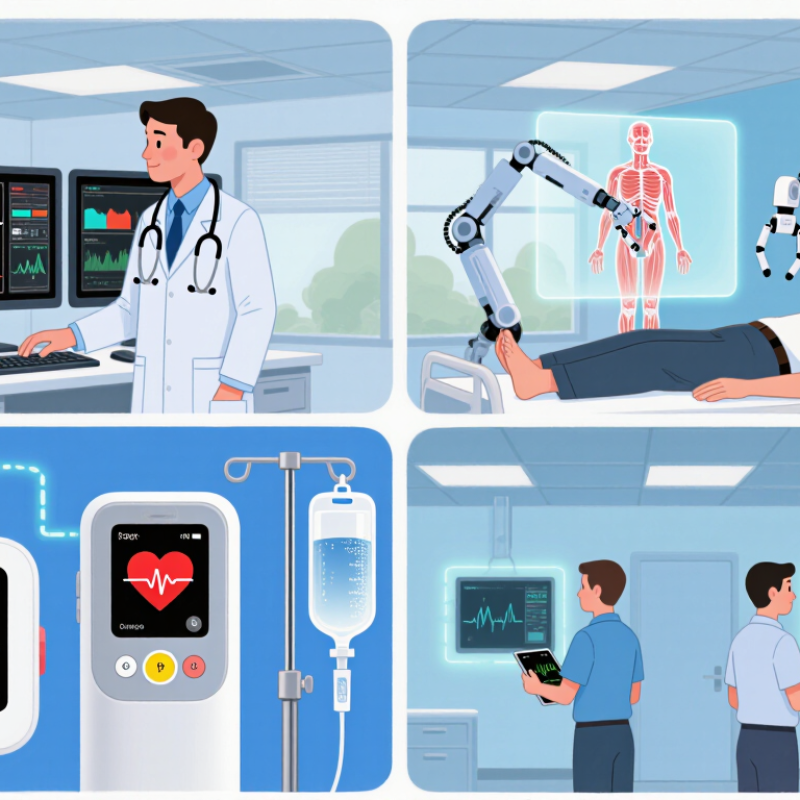
Hospitals are adopting Smart Medical Devices to improve monitoring, support clinical decisions, and streamline daily care. These tools range from connected vital-sign monitors and smart infusion pumps to wearable sensors and imaging systems with AI-assisted analysis. Their value is practical: a nurse may review a patient’s oxygen levels from a central station, while an infusion pump alerts staff to a programmed limit. Small improvements can matter. But technology alone does not guarantee safer care.

Choosing the right devices requires more than comparing features. Hospitals need to consider clinical evidence, accuracy, interoperability, cybersecurity, staff training, maintenance, and the needs of different patient groups. A monitor that works well in one ward may not suit a busy emergency department. Data also needs context; an alert can help, but too many alerts may distract clinicians. That part is easy to underestimate. This overview explores leading device categories and the questions hospital teams should ask before adoption. It does not treat any product as a universal solution. Device performance depends on the setting, workflow, and appropriate clinical oversight. Even strong technology can disappoint when implementation is rushed. Hospitals should assess evidence and local requirements with qualified clinical and technical teams before making purchasing decisions.
What Are the Top Smart Medical Devices for Hospitals?

What Smart Medical Devices Are and How Hospitals Use Them

Smart medical devices combine sensors, software, and connectivity to collect or act on clinical information. In hospitals, they include bedside monitors, connected infusion pumps, smart beds, and imaging systems with decision-support features. Their value is practical: a nurse can see a patient’s oxygen level at a central station instead of checking every room manually. Some systems also flag unusual readings for review. They support clinical judgment; they do not replace it.

Hospitals use connected monitors to track vital signs, share readings with electronic records, and alert staff when measurements cross set limits. Smart pumps can help clinicians check programmed doses, while connected beds may report whether a patient is moving or attempting to leave. The American Hospital Association’s analysis of 2018 survey data found that 76% of U.S. hospitals connected with patients or consulting practitioners through video and other technology. That wider shift toward connected care gives devices a role beyond the bedside.

The U.S. Food and Drug Administration’s 2023 inventory listed 692 authorized AI/ML-enabled medical devices, with radiology representing the largest category. This is not a count of every smart hospital device; it shows how software-assisted tools are entering clinical workflows. Reliable use still depends on staff training, secure data handling, and clear alarm settings. Too many alerts can distract rather than help. That problem is easy to underestimate. Hospitals need to test how devices work in real shifts, not only during installation.

The Main Categories of Smart Medical Devices in Hospitals

Smart medical devices in hospitals fall into several practical categories. Bedside monitors track heart rhythm, oxygen saturation, blood pressure, and temperature, sending alerts when readings cross set limits. Connected infusion systems deliver prescribed fluids and medicines while recording dose and timing. That matters at night. Staff still need to verify alarms and patient context; a screen cannot replace clinical judgment.

Diagnostic and imaging devices form another group. Portable ultrasound, connected electrocardiographs, and digital imaging systems can move results into the patient record, reducing manual handoffs. A third category supports remote observation: wearable sensors and home-monitoring kits can transmit measurements after discharge. The American Hospital Association reported that 76% of U.S. hospitals used telehealth to connect with patients or clinicians in 2017, showing how care beyond the ward was already expanding. The figure is dated, but useful.

Finally, hospitals use smart beds, location tags, and connected refrigerators to track equipment, patients, and temperature-sensitive supplies. These tools can help staff find a wheelchair or check storage conditions faster. The World Health Organization’s 2016 Global Observatory for eHealth found that 58% of surveyed member states had an mHealth strategy, reflecting broader momentum behind connected care. Yet device counts alone can mislead: poor integration creates duplicate alerts, and a rushed setup may leave gaps in data. Staff training and routine checks matter just as much as the hardware.

Leading Devices for Patient Monitoring, Diagnosis, and Treatment

Hospital smart medical devices are most useful when they fit naturally into clinical workflows. Bedside monitors can track heart rate, oxygen levels, blood pressure, and temperature continuously. Clear alerts help staff notice changes without watching every screen. They should be adjustable, since too many alarms can cause fatigue.

Every minute matters.

For diagnosis, digital stethoscopes, portable ultrasound systems, and connected electrocardiographs can bring useful measurements closer to the patient. Some devices transmit results to approved clinical systems, helping care teams compare readings over time. Smart infusion pumps can support treatment by tracking programmed delivery and flagging certain errors. They still require trained staff and careful checks.

Technology does not replace judgment, and integration can be harder than expected.

Tips: Check device accuracy, battery life, cleaning needs, and compatibility with existing records before purchase. Test alert settings in realistic ward conditions. Ask nurses and technicians what slows them down.

A small usability problem can become a daily burden. Keep maintenance and staff training in the plan, not as afterthoughts.

How Hospitals Select and Implement Smart Medical Devices

What Are the Top Smart Medical Devices for Hospitals?
How Hospitals Select and Implement Smart Medical Devices

Hospitals should choose smart medical devices around clinical needs, not novelty. A connected monitor may help staff spot changes sooner, but only if its alerts are useful and clear. Teams should compare accuracy, ease of cleaning, battery life, and compatibility with existing systems. A bedside trial can reveal practical problems, such as alarms being hard to hear over routine ward noise. Small details matter.

Selection also involves the people who will use and support each device. Nurses, physicians, biomedical technicians, and IT staff can assess different risks before purchase. Ask how data moves between devices and hospital records, who can access it, and what happens during a network outage. That takes time. A low purchase price may not reflect training, maintenance, or replacement costs over several years.

Implementation works best in stages. Start with a small pilot on one ward, then gather feedback during real shifts. Track setup delays, alert response, device downtime, and staff confidence. Train users with hands-on scenarios, not just a quick slide presentation. Not every pilot succeeds. Early results can also look better than everyday performance, so hospitals should revisit the decision after wider use and adjust workflows when needed.

What Are the Top Smart Medical Devices for Hospitals? - How Hospitals Select and Implement Smart Medical Devices

Device category Common hospital use Smart capabilities Integration considerations Key selection and implementation checks
Multiparameter patient monitors Continuous or spot monitoring of vital signs in critical care, emergency, and general-care settings. Displays physiological measurements and alarms; some systems send observations to central monitoring stations. Assess EHR connectivity, patient-to-device association, and how measurements are transmitted. HL7 v2 messaging is commonly used for clinical observation interfaces; capabilities vary by system. Check measurement needs, alarm configuration, network coverage, device-cleaning workflow, staff training, and how alarm responsibility is assigned.
Smart infusion pumps Delivery of intravenous fluids and medications in inpatient and procedural care. May include dose-error reduction software, drug libraries, event logs, and wireless fleet management. For pump-EHR workflows, validate medication-order transfer, patient and medication matching, and documentation feedback. Interfaces and supported workflows differ across systems. Review drug-library governance, alert override processes, cybersecurity, battery management, maintenance, and testing of the complete medication workflow.
Connected smart beds Patient positioning, transport, and support for bedside care on inpatient units. Depending on the model, may provide bed-exit alerts, position information, or integrated controls. Confirm compatibility with nurse-call systems and room networks. Decide whether bed status is displayed centrally and how staff will verify patient-bed association. Evaluate alarm routing, false or missed alerts, transfer and cleaning procedures, staff ergonomics, and the effect on fall-prevention workflows.
Wearable vital-sign sensors Selected inpatient or remote-monitoring programs that need measurements between bedside observations. Can collect measurements such as heart rate or oxygen saturation and transmit data wirelessly, depending on the device and intended use. Check wireless coverage, data routing, EHR documentation, patient identity matching, and whether readings are continuous or intermittent. Confirm clinical validation for the intended population, skin-contact and charging procedures, alert thresholds, escalation coverage, and staff responsibilities.
Point-of-care diagnostic analyzers Near-patient testing, such as blood gas or selected chemistry testing, where rapid results support clinical decisions. May automate result capture, quality-control records, operator identification, and transmission to laboratory systems. Coordinate with the laboratory information system and EHR. HL7 messaging is commonly used for result exchange; verify test codes, units, reference ranges, and patient identifiers. Plan operator competency, quality-control oversight, reagent and consumable supply, result verification, maintenance, and downtime procedures.
Connected imaging equipment Acquisition and review of diagnostic images in radiology, cardiology, and other imaging services. Digital image capture, worklist support, and transfer of images and related information to clinical systems. Assess DICOM compatibility and integration with PACS, RIS, and relevant EHR workflows. Validate modality worklists, image routing, and patient demographics. Review image quality, storage and network capacity, access controls, service availability, room workflow, and plans for equipment upgrades.
Connected ventilators Respiratory support in intensive care, emergency, and selected procedural settings. May provide device alarms, respiratory measurements, and data for bedside or central review. Determine which measurements and events can be exported, where they are documented, and how timestamps and patient-device associations are maintained. Check clinical requirements, alarm and escalation workflows, backup equipment, biomedical engineering support, network resilience, and respiratory-team training.

Selection note: This is a practical comparison, not a universal ranking. Available features, interfaces, and regulatory indications vary by device and configuration; validate each option against clinical needs, local workflows, interoperability requirements, cybersecurity policies, and applicable regulations.

Safety, Connectivity, and Data Management in Smart Medical Care

Smart medical devices matter when they make care safer and information easier to act on. Connected monitors, infusion pumps, and imaging systems can bring useful readings to the bedside. Safety depends on more than sensors. Staff need clear alerts, tested alarm settings, and a practical way to verify measurements. Devices should support clinical judgment, not replace it. Even a brief delay in updating a patient record can cause confusion during a shift change.

Reliable connectivity helps devices share information with approved clinical systems. Hospitals should define who can access each data stream and what happens when a network connection fails. They also need routine software updates, access controls, and logs showing when information changes. Data quality matters. A connected device can still send an inaccurate value if its sensor is poorly placed or overdue for checking. Training helps, though busy teams may not always have enough time. That limitation deserves attention.

Tips: Test alarms during routine checks. Confirm patient and device details before recording readings. Keep a clear fallback process for network outages. Review access logs regularly. Small gaps add up. A tidy dashboard can still hide a flawed workflow, so ask staff where the process feels awkward.

FAQS

How should a hospital choose smart medical devices?

Start with clinical needs, not novelty. Compare accuracy, cleaning requirements, battery life, and compatibility with existing systems. A bedside trial can expose practical issues.

Who should help evaluate a device?

Nurses, physicians, biomedical technicians, and IT staff can assess different risks. Their daily work differs. Include them before purchase.

What should hospitals check about device alerts?

Test alarms in a real ward, where routine noise may mask them. Make sure alerts are clear and settings suit clinical workflows. More alerts are not always better.

How can hospitals manage device data safely?

Define who can access each data stream and keep logs of changes. Use access controls and routine software updates. Data needs oversight.

What can go wrong with connected readings?

A poorly placed sensor or overdue check can produce an inaccurate value. Confirm patient and device details before recording readings.

How should a hospital introduce a new device?

Begin with a small pilot on one ward. Track setup delays, response times, downtime, and staff confidence during real shifts.

What training helps staff use devices well?

Use hands-on scenarios, such as responding to an alarm during a busy shift. A quick slide presentation may not be enough.

What should happen if the network fails?

Keep a clear fallback process so staff can continue work and verify information. Outages are easy to overlook during planning.

How should hospitals judge a pilot?

Review results after wider use, since early performance may look better than everyday use. Some workflows will still feel awkward. That matters.

Conclusion

Smart Medical Devices are connected technologies that help hospitals observe patients, support clinical decisions, and deliver care more efficiently. They include monitoring equipment that tracks vital signs, diagnostic systems that assist with imaging and testing, and treatment devices that help clinicians manage therapies. By gathering timely information at the bedside and across departments, these tools can help care teams recognize changes in a patient’s condition and coordinate their response.

Choosing and implementing devices requires hospitals to consider clinical needs, ease of use, staff training, compatibility with existing systems, and ongoing maintenance. Reliable connectivity and thoughtful data management are also essential: information should be accurate, accessible to authorized care teams, and protected through appropriate safeguards. When hospitals integrate devices carefully into daily workflows, they can support safer, more informed care while helping staff use their time and resources effectively.

Aria

Aria

Aria is a dedicated marketing professional with a deep passion for innovative strategies and a keen understanding of our company's product offerings. With a wealth of experience in the industry, Aria excels at crafting engaging content that highlights the unique features and benefits of our......