Choosing the right Sleep Apnea Devices can feel like comparing unfamiliar tools in a dark room. One device may reduce snoring, while another protects breathing throughout the night. The best option depends on your diagnosis, airway anatomy, comfort, lifestyle, and medical history. It is rarely a simple shopping decision.
Dr. Atul Malhotra, a respected sleep medicine specialist, has stated that “CPAP is the gold standard treatment for obstructive sleep apnea.” His point matters because continuous positive airway pressure remains highly effective when patients use it consistently. Still, CPAP is not automatically ideal for everyone. A nasal mask may feel lighter, but mouth breathing can cause leaks. A full-face mask offers broader coverage, yet some users find it bulky. Humidification may reduce dryness. Correct pressure settings remain essential.
Other Sleep Apnea Devices include mandibular advancement devices, positional therapy tools, and implanted stimulation systems. Each has specific indications and limitations. A custom oral appliance might suit selected adults with mild or moderate obstructive sleep apnea. It may not adequately treat severe disease. A clinician should confirm suitability through testing and follow-up.
The newest device is not always the best.
Real experience exposes small problems. A loose strap can wake you repeatedly. A noisy machine can undermine motivation. Even a clinically effective device may fail if it stays in a drawer. This guide will compare performance, comfort, safety, maintenance, evidence, and long-term adherence. It will also acknowledge uncertainty, because personal fit cannot be measured from product specifications alone. Professional evaluation should guide the final decision.
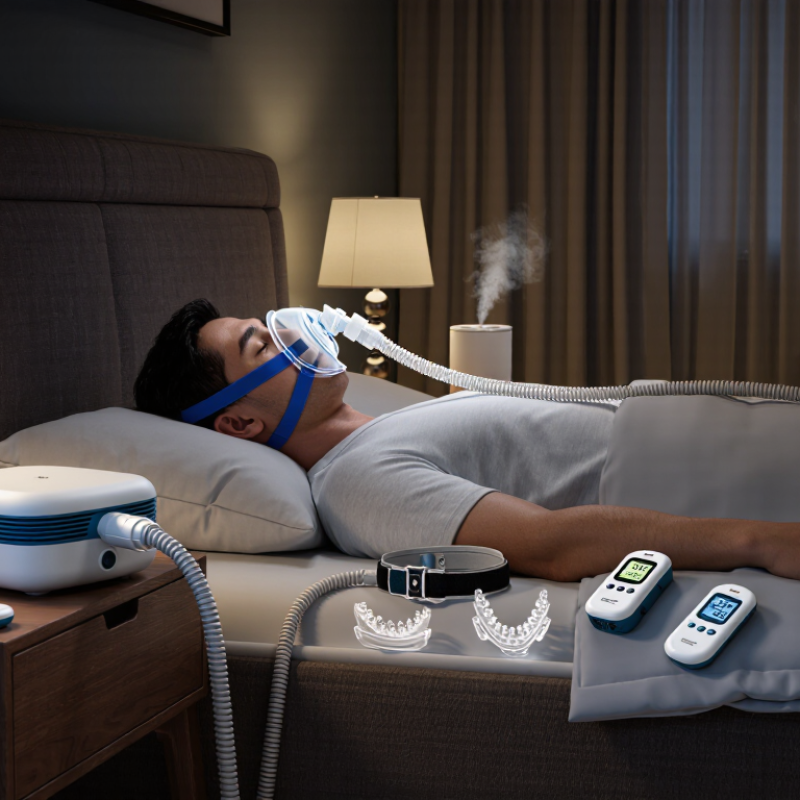
Sleep apnea is more than loud snoring. Breathing may stop repeatedly during sleep, reducing oxygen and fragmenting rest. Obstructive sleep apnea occurs when relaxed throat tissues block airflow. Central sleep apnea involves disrupted breathing signals from the brain. These conditions need different clinical approaches.
A sleep study helps identify the pattern, severity, oxygen changes, and sleeping position involved. Positive airway pressure therapy is often effective for obstructive sleep apnea. It pushes air through a mask and keeps the airway open. Some devices adjust pressure automatically, while others provide separate pressures for breathing in and out. Mask leaks, dry mouth, and facial pressure can affect nightly use. Fit matters. Comfort counts.
Oral appliances may suit selected adults with mild or moderate obstruction, especially when jaw position affects the airway. A qualified dental clinician should assess the teeth and jaw first. Positional therapy can help people whose events occur mainly while sleeping on their backs. Weight changes, alcohol near bedtime, nasal congestion, and other health conditions also influence treatment. A device can be medically suitable yet practically wrong. It is easy to focus on advanced features and ignore a poor mask seal. Regular follow-up allows pressure settings, symptoms, and oxygen data to be reviewed safely. Do not choose a device from symptoms alone. A clinician should confirm the diagnosis and check whether the treatment is working.
Choosing a sleep apnea device starts with measuring severity, not browsing features.
A sleep study reports the apnea-hypopnea index, or AHI.
Clinical practice commonly defines mild apnea as 5–14 events per hour, moderate as 15–29, and severe as 30 or more. These thresholds are cited in American Academy of Sleep Medicine guidance. The numbers matter. They do not tell the whole story.
Sleep symptoms and personal risks also shape the decision. Loud snoring, morning headaches, and daytime sleepiness deserve attention. High blood pressure, heart disease, obesity, or unsafe driving raise the stakes. The Lancet Respiratory Medicine estimated that 936 million adults aged 30–69 may have obstructive sleep apnea worldwide. That estimate shows the scale, but it cannot diagnose one person. A home test may be convenient, yet it can miss milder or complex cases.
Think about your real bedroom, not an ideal laboratory. Can you tolerate airflow all night? Do nasal blockage, facial discomfort, or limited hand movement affect use? A fixed-pressure device, an automatically adjusted device, an oral appliance, or positional support may suit different needs. A sleep specialist should match the option with your test results and medical history. Comfort matters because effective treatment is useless when abandoned after three nights. The uncomfortable truth is that the first choice may be wrong. Follow-up data, symptom changes, and treatment adherence should guide adjustments.
Choosing a sleep apnea device starts with an accurate diagnosis, not a shopping list. A sleep study can show whether breathing pauses are mild, severe, obstructive, or linked to other conditions. CPAP delivers one steady pressure throughout the night. It is often reliable, but some users dislike exhaling against continuous airflow. APAP adjusts pressure within a prescribed range, which may feel gentler when sleeping positions change.
BiPAP provides separate pressures for inhaling and exhaling. Clinicians may consider it when higher pressures, certain breathing disorders, or CPAP intolerance are involved. It is not automatically a better option. More settings can also mean more adjustment. A sleep specialist should review the data, symptoms, and medical history before changing therapy.
Oral appliances move the lower jaw or tongue forward. They can suit some adults with mild to moderate obstructive apnea, especially those who cannot tolerate a mask. However, jaw discomfort, dry mouth, or bite changes may occur. A qualified dental professional should fit and monitor the device. Positional devices may help people whose apnea worsens while lying on their back. They are less useful when events occur in every sleeping position. I would not treat oxygen alone as a replacement for airway therapy. It may improve oxygen readings while breathing interruptions continue. Fit matters. A leaking mask, blocked nasal passage, or uncomfortable headgear can quietly reduce nightly use. Regular follow-up and downloaded device data reveal problems that memory often misses.
Comfort should guide your first comparison. A mask must seal without pressing painfully against the nose or cheeks. During a supervised trial, lie down and turn naturally. Check for air leaks near your eyes. Notice whether the headgear pulls your hair or irritates your skin. Nasal dryness may suggest heated humidification, but moisture levels require personal adjustment. Small discomforts can become major barriers to regular use.
Features should support effective treatment, not simply look impressive. Useful options may include pressure adjustment, leak alerts, quiet operation, humidification, and therapy data. Your sleep clinician should interpret these measurements, because a display cannot explain every breathing event. Never change prescribed pressure without professional guidance. Choose equipment with clear safety instructions and approval for use in your region. Inspect power cords, connectors, and water chambers before use. Keep the device away from standing water.
Maintenance affects both safety and comfort. Clean the mask, tubing, and chamber as directed by the manufacturer. Use mild methods only. Harsh chemicals can damage surfaces and leave irritating residue. Allow parts to dry fully before assembly. Examine cushions for cracks, stiffness, or discoloration. Replace worn components according to professional advice and the product manual. It is easy to underestimate cleaning. I would also question any device that feels difficult to maintain, even when its features seem advanced.
Choosing a sleep apnea device starts with a confirmed diagnosis, not an online quiz. A sleep specialist should review your sleep study, symptoms, airway anatomy, and health history. Continuous positive airway pressure may suit frequent breathing interruptions. An oral appliance may fit selected adults with mild or moderate obstruction. Other options require specialist assessment. Comfort matters. A quiet device is useless if it cannot maintain an open airway.
During fitting, ask the specialist to explain pressure settings, mask fit, cleaning, and warning signs. Bring the device to follow-up visits. A clinician can inspect leak data and adjust treatment more accurately than guesswork. Notice small details: dry mouth at 3 a.m., red marks near the nose, or tubing pulled tight beside the bed. These clues often explain poor adherence. Use the device for every sleep period, including naps, unless your clinician advises otherwise. Never change prescribed settings alone.
Review progress after several weeks, then at regular clinical intervals. Compare usage time, residual event data, comfort, and daytime alertness. Do not trust one good night. Nor one bad night. Ask whether the device still matches your condition, weight changes, medications, or sleeping position. A specialist may recommend another mask, humidification, dental adjustment, or repeat testing. It is easy to blame yourself when treatment feels awkward. That assumption can be wrong. Question glowing reviews that ignore follow-up care, because safe treatment depends on monitoring, fitting, and honest reporting.
| Device Type | How It Works | Best Suited For | Main Benefits | Common Limitations | Key Selection Criteria | Specialist Review and Follow-Up |
|---|---|---|---|---|---|---|
| Auto-adjusting positive airway pressure | Delivers pressurized air through a mask and automatically adjusts pressure within a prescribed range in response to breathing changes. | Many adults with obstructive sleep apnea whose pressure needs vary during the night or between sleep positions. | Pressure can adapt to changing needs; provides detailed usage and breathing-event data; commonly used for home treatment. | Mask leaks, nasal congestion, dryness, noise, or discomfort may affect regular use. It is not intended to treat central sleep apnea without specialist guidance. | Prescribed pressure range, mask comfort, humidification, data recording, portability, power requirements, and access to technical support. | A sleep specialist should confirm the diagnosis, review treatment data, assess residual events and leaks, and adjust settings when necessary. |
| Fixed-pressure positive airway pressure | Provides a consistent level of pressurized air through a mask to help keep the upper airway open during sleep. | People whose effective pressure has been established through a sleep study, titration, or specialist assessment. | Simple operating principle, stable pressure delivery, and reliable monitoring of nightly use on many current systems. | A single pressure may not feel equally comfortable in every sleep position or stage of sleep. Incorrect settings can reduce effectiveness or comfort. | Clinically determined pressure, comfortable mask seal, exhalation comfort, humidifier options, and ease of cleaning. | Follow-up should include adherence, mask fit, residual apnea-hypopnea index, symptoms, and side effects. Settings should not be changed independently. |
| Bilevel positive airway pressure | Uses a higher pressure during inhalation and a lower pressure during exhalation. | Selected patients who need higher pressure support, have difficulty exhaling against continuous pressure, or have specific breathing disorders. | Different inhalation and exhalation pressures may improve comfort and ventilation for appropriately selected patients. | More complex and generally more expensive than basic positive airway pressure. It is not automatically better for routine obstructive sleep apnea. | Underlying diagnosis, pressure requirements, breathing pattern, ability to tolerate the mask, and need for advanced monitoring. | Specialist-led setup is important. Follow-up may require review of ventilation data, oxygenation, symptoms, and possible treatment-emergent central events. |
| Oral appliance | A custom-fitted device worn in the mouth that holds the lower jaw or tongue forward to help reduce upper-airway collapse. | Some adults with mild to moderate obstructive sleep apnea, or people who cannot tolerate positive airway pressure, after professional evaluation. | Small, quiet, and easy to travel with; does not require a mask, tubing, or electrical power during use. | May cause jaw discomfort, tooth movement, bite changes, dry mouth, or excess saliva. Effectiveness varies and may be lower in severe disease. | Custom fitting by a qualified dental sleep professional, dental health, jaw-joint condition, adjustability, and objective confirmation of effectiveness. | A sleep physician should coordinate diagnosis and follow-up. A qualified dentist should monitor fit, jaw comfort, bite changes, and appliance advancement; follow-up sleep testing may be needed. |
| Positional therapy device | Uses vibration, feedback, or another physical cue to discourage sleeping on the back. | People whose obstructive sleep apnea is substantially worse when sleeping supine, as documented by sleep testing. | Noninvasive, generally compact, and may be useful as part of a broader treatment plan. | May be ineffective when apnea occurs in all sleep positions. Some users experience disturbed sleep or reduced long-term adherence. | Evidence of position-dependent apnea, comfort, reliable detection of body position, battery life, and ability to track consistent use. | Specialist review should compare symptoms and sleep-test results before and after use. It should not replace prescribed therapy without objective evidence of control. |
| Expiratory nasal resistance device | Uses small nasal valves or a similar mechanism to create resistance during exhalation, helping maintain airway pressure. | Carefully selected adults with uncomplicated obstructive sleep apnea who can breathe adequately through the nose. | Lightweight, quiet, and convenient for travel; no headgear or powered machine is required. | Nasal blockage, discomfort, skin irritation, and inconsistent effectiveness can limit use. It is unsuitable for some patients and conditions. | Nasal breathing ability, severity and pattern of apnea, comfort, proper application, and objective evidence of benefit. | A clinician should confirm suitability and review symptoms and follow-up testing. Persistent snoring or daytime sleepiness may indicate inadequate treatment. |
| Supplemental oxygen | Increases the oxygen concentration delivered during sleep but does not directly prevent upper-airway obstruction. | Specific cases of nocturnal hypoxemia or selected breathing disorders, usually as an addition to—not a replacement for—primary therapy. | May improve low oxygen levels when prescribed for an appropriate medical indication. | Does not reliably eliminate obstructive events and can mask ongoing breathing problems. Fire safety and equipment handling are essential. | Documented oxygen need, underlying lung or heart condition, oxygen target, interaction with other therapy, and home safety requirements. | Must be prescribed and monitored by a clinician. Follow-up may include overnight oxygen measurement and assessment of the underlying cause of low oxygen. |
| Implantable upper-airway nerve stimulation | Stimulates a nerve that activates selected upper-airway muscles during sleep to reduce airway collapse. | A limited group of adults with moderate to severe obstructive sleep apnea who meet anatomical, medical, and treatment-history criteria. | Provides an alternative for carefully selected patients who cannot use positive airway pressure and may improve sleep-related symptoms. | Requires a procedure, healing period, ongoing follow-up, and a compatible anatomical profile. It is not appropriate for every type of apnea. | Apnea severity, body characteristics, airway anatomy, absence of significant central apnea, procedural risks, and ability to attend follow-up visits. | Evaluation involves a sleep specialist and an appropriately trained surgical team. Device settings and treatment response require structured follow-up and, often, repeat testing. |
Clinical note: Device choice should be based on a confirmed diagnosis, apnea type and severity, medical history, sleep-study findings, comfort, and objective follow-up. A sleep specialist should review persistent symptoms, treatment data, mask or appliance problems, and any significant change in health.
Start with a confirmed sleep study, not an online quiz. A specialist reviews breathing pauses, symptoms, airway anatomy, and medical history. Shopping comes later.
CPAP provides one steady pressure throughout the night. APAP adjusts pressure within a prescribed range as conditions change. BiPAP uses separate pressures for inhaling and exhaling. More settings do not always mean better treatment.
It may suit selected adults with mild or moderate obstructive apnea. The device moves the lower jaw or tongue forward. A qualified dental professional must fit and monitor it. Jaw pain and bite changes can occur.
Positional devices may help when apnea worsens while lying on the back. They are less useful when breathing events occur in every position. A sleep study can reveal this pattern.
Usually, oxygen does not replace treatment that keeps the airway open. It may improve oxygen readings while breathing interruptions continue. That can create false reassurance.
Notice dry mouth at 3 a.m., red marks near the nose, or leaking air. Tight tubing can pull the mask sideways beside the bed. Tiny clues matter.
Use the device during every sleep period, including naps, unless advised otherwise. Ask about another mask, humidification, or pressure adjustments. Comfort matters, but comfort alone cannot prove effective treatment.
Review progress after several weeks and at regular clinical visits. Bring the device or its downloaded data. Compare usage time, residual events, comfort, and daytime alertness. One good night proves little.
Do not change settings alone. Contact the sleep specialist instead. Weight changes, medicines, sleeping positions, or new symptoms may alter treatment needs. I might blame myself too quickly; the setup may be wrong.
Choosing the right Sleep Apnea Devices begins with understanding how sleep apnea affects breathing and identifying the type and severity of the condition through professional evaluation. Treatment may involve CPAP, APAP, BiPAP, oral appliances, or other specialized options, depending on your symptoms, sleep study results, medical history, and personal needs. Each device offers different benefits, so it is important to consider pressure adjustment, ease of use, noise, portability, mask or mouthpiece comfort, and compatibility with your daily routine.
Safety and long-term maintenance are equally important. Users should understand how to clean, store, and regularly inspect their equipment, while also following professional instructions carefully. A qualified sleep specialist can help compare suitable choices, guide the fitting and adjustment process, and monitor treatment effectiveness over time. Reviewing comfort, sleep quality, side effects, and treatment data regularly can make it easier to select a device that supports consistent use and better overall sleep health.

Fule