Choosing the 2026 top Emergency Medical Services Equipment suppliers requires more than comparing product catalogs. It requires evidence from ambulances, emergency departments, and field teams.
The World Health Organization reports approximately 1.19 million annual road traffic deaths worldwide. Many more people sustain injuries requiring rapid assessment and transport. This pressure shapes demand for reliable stretchers, defibrillators, ventilators, patient monitors, suction units, and infection-control supplies. Every device must perform under movement, noise, poor lighting, and limited power.
Standards matter.
The WHO Emergency Care Systems Framework emphasizes coordinated care, trained personnel, essential equipment, and dependable referral networks. In the United States, NEMSIS data also show the scale of modern ambulance operations, with millions of emergency responses documented through national reporting systems. These figures reveal a practical truth: equipment failure is not a minor purchasing inconvenience. It can delay treatment during the first critical minutes.
Market research from Grand View Research, Fortune Business Insights, and MarketsandMarkets indicates continued growth in emergency medical equipment demand. However, their market sizes and forecasts differ because they define product categories differently. That uncertainty deserves attention. A supplier ranking should therefore examine more than revenue or online visibility. It should assess regulatory clearance, clinical usability, maintenance response, battery performance, training, interoperability, and documented field experience.
This guide evaluates leading suppliers through those factors. It also considers regional service coverage and replacement-part availability. A low purchase price may look attractive. Yet an unavailable battery can make a sophisticated monitor useless. Supplier claims should be tested against service records, product documentation, and frontline feedback. No ranking is perfect, but transparent criteria make it more useful.
What Are Emergency Medical Services Equipment Suppliers?
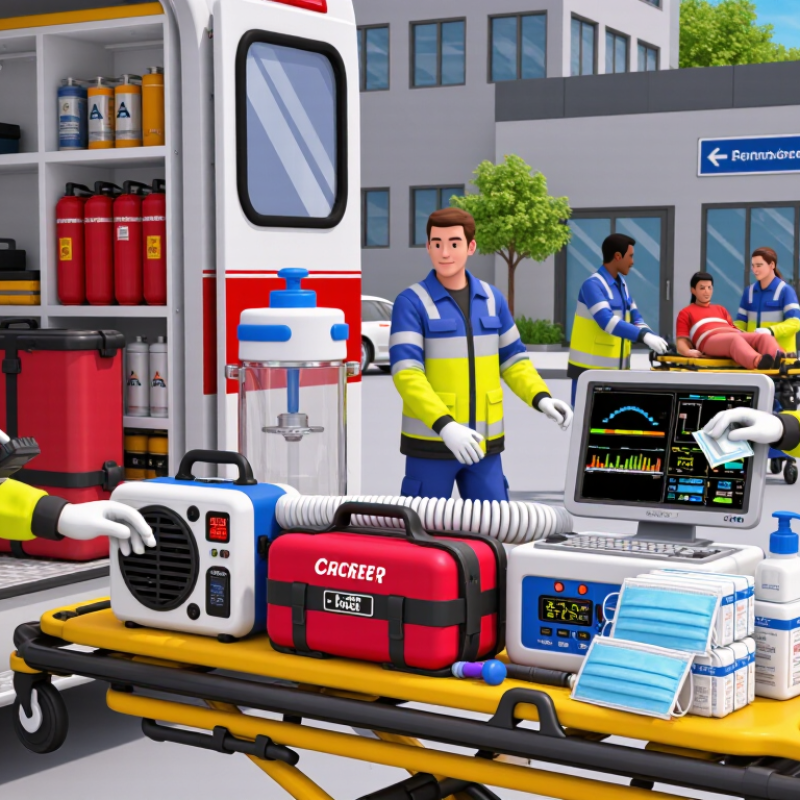
Emergency medical services equipment suppliers are specialized partners for urgent-care operations. They connect ambulance services, hospitals, rescue teams, and public agencies with essential medical tools. Their products may include patient monitors, defibrillators, stretchers, oxygen equipment, trauma kits, and protective supplies.
What are they, exactly?
They do more than sell equipment. A capable supplier helps buyers select suitable devices, confirm technical specifications, and arrange delivery. They may also provide installation, user training, maintenance, and replacement parts.
Not just catalogs.
A dependable supplier understands how a monitor performs inside a moving ambulance, not only how it appears on a product sheet. Documentation should include operating instructions, service records, warranty terms, and traceable serial numbers.
Training matters too. Paramedics need clear instructions during noisy, stressful calls. Poor explanations can create hesitation, even when the equipment itself is reliable. Suppliers should support recognized medical-device requirements and maintain consistent quality checks. They also need practical experience with cleaning routines, battery management, storage temperatures, and inspection schedules.
In 2026, buyers may compare suppliers through response times, technical support, product availability, and total ownership costs. The cheapest quotation is not always the safest decision. An experienced procurement team should request references, examine maintenance capacity, and test critical equipment before wider deployment.
Some suppliers promise more than they can consistently deliver. That weakness deserves attention. A careful supplier admits limitations, documents them, and improves its process instead of hiding problems.
Key Equipment Categories for Emergency Medical Services
Emergency medical services depend on equipment that works under pressure, in rain, darkness, and crowded streets. Core categories include stretchers, stair chairs, splints, and patient securing systems. These tools support safe movement from homes to ambulances. Airway equipment, oxygen delivery devices, suction units, and ventilation tools help clinicians manage breathing emergencies. Reliable monitors should track vital signs clearly, even during vehicle movement.
Trauma supplies need organized dressings, tourniquets, bleeding-control materials, and thermal blankets. Defibrillators, infusion equipment, diagnostic tools, and emergency medication storage also deserve careful review. Communication systems and portable power supplies are easy to overlook. Yet a dead battery can delay care. Experienced buyers should assess durability, cleaning requirements, training needs, service response, and compatibility with existing vehicles. Certifications and documented testing matter more than attractive packaging. No checklist is perfect. Field feedback must reshape purchasing decisions.
Tips:
Keep high-use items visible and reachable. Label drawers by clinical purpose, not by supplier terminology. Test batteries before every shift. Inspect straps, seals, cables, and oxygen connections regularly. Ask crews to report awkward handles or unclear controls. A device may meet specifications but still slow a tired clinician. Suppliers should provide traceable documentation, practical demonstrations, replacement parts, and clear maintenance guidance. Budget for total ownership, including training, calibration, repairs, and safe disposal.
Criteria for Evaluating Top EMS Equipment Suppliers in 2026
In 2026, a top EMS equipment supplier should be judged by field performance, not catalog size. That distinction matters. The NEMSIS 2023 Public-Release Dataset contains more than 50 million EMS activations, offering a strong benchmark for real-world reliability. Buyers should request failure rates, battery endurance, repair times, and incident data from comparable ambulance services. Marketing claims are not evidence.
Clinical safety must guide the scorecard. The American Heart Association’s Heart Disease and Stroke Statistics—2024 Update reported approximately 356,000 adult out-of-hospital cardiac arrests in the United States during 2022, with about 10.4% surviving to hospital discharge. Defibrillator suppliers should therefore provide validated performance data, self-test records, and clear maintenance alerts. Evaluate compliance with ISO 13485, ISO 14971, IEC 60601, and applicable medical-device registration rules. Review FDA recall records, too.
Operational details often expose weak suppliers. Check whether monitors, ventilators, stretchers, and data systems exchange information without fragile workarounds. Ask for response-time guarantees, spare-part availability, cybersecurity updates, and hands-on training for night crews. Total cost should include consumables, calibration, software, and downtime. A perfect scorecard is unrealistic. I would still test equipment during simulated winter calls, poor lighting, wet gloves, and a rushed handover. Supplier references can help, but they may hide quieter failures. Data should challenge confidence, not merely confirm it.
Leading Emergency Medical Services Equipment Suppliers in 2026
Leading Emergency Medical Services Equipment Suppliers in 2026
In 2026, leading emergency medical services equipment suppliers will compete on readiness, not catalog size. The WHO Global Status Report on Road Safety 2023 reports about 1.19 million road deaths annually. It also estimates 20–50 million nonfatal injuries. These figures make reliable stretchers, defibrillators, monitors, and airway equipment operational necessities. Suppliers should provide clear maintenance schedules, training records, and traceable replacement parts.
Field experience exposes weaknesses quickly. A monitor may work well in a hospital but fail during vibration, dust, or low temperatures. Procurement teams should request independent test results, battery-cycle data, and repair response times. ISO 13485 certification can support quality controls, but certification alone does not prove field performance. Ask for evidence from comparable ambulance systems. Small details matter. Connector compatibility matters.
Market forecasts also deserve careful reading. Grand View Research’s 2024 analysis projects continued growth in the global ambulance services market through 2030, driven partly by aging populations and expanding emergency infrastructure. That growth may increase demand for connected devices and compact equipment. However, forecasts are not field evidence. Suppliers sometimes promise seamless integration, yet software updates can complicate dispatch workflows. Buyers should test equipment with real crews before large purchases. No supplier is perfect. The strongest partners disclose limitations, document corrective actions, and keep support available after delivery.
How to Select the Right EMS Equipment Supplier for Your Needs
Selecting an EMS equipment supplier begins with the patient journey, not a glossy catalog. In field practice, crews need gear that works in rain, cramped vehicles, and low light. Define your call types, response distances, storage limits, and staff skill levels before requesting quotes. A supplier should explain specifications in plain language. Ask for test records, user instructions, and maintenance intervals. Experience matters here. A knowledgeable representative can identify poorly matched equipment before it reaches an ambulance. Who supports you at 2 a.m.?
Verify quality through traceable documentation, controlled production, and consistent inspection records. Check whether products meet medical-device requirements in your operating region. Request evidence, not broad promises. Review battery life, cleaning methods, replacement parts, warranty terms, and delivery performance. Ask for a sample evaluation with real users. Let paramedics handle the equipment while wearing gloves. Measure setup time, alarm clarity, weight, and storage fit. Small details become serious delays. Good suppliers also provide practical training, refresher materials, and reachable technical support. A certificate alone does not prove field readiness.
Speak with comparable emergency services about repairs, back orders, and communication during failures. Review the supplier’s escalation process and backup inventory. Put service levels, inspection duties, and reporting requirements in writing. Price should include training, consumables, updates, and downtime. The lowest quote can become expensive quickly. I would still leave room for doubt. A promising demonstration may hide awkward cleaning or fragile connectors. Test under pressure. Record weaknesses, and invite an independent clinical or technical reviewer to challenge the decision.
2026 Top Emergency Medical Services Equipment Suppliers?
How to Select the Right EMS Equipment Supplier for Your Needs
This procurement scorecard highlights the practical criteria EMS organizations commonly use when evaluating equipment suppliers. Regulatory compliance and product safety receive the highest weighting because emergency medical devices must support reliable patient care, traceability, and applicable quality requirements. Buyers should adjust the weights according to local regulations, fleet size, clinical needs, and budget.
FAQS
They provide medical tools for ambulances, hospitals, rescue teams, and public agencies. Products may include monitors, defibrillators, stretchers, oxygen systems, trauma kits, and protective supplies. They are operational partners.
A reliable supplier helps select suitable devices and confirms technical specifications. Support may include delivery, installation, training, maintenance, and replacement parts. Documentation should include manuals, warranties, service records, and traceable serial numbers.
Paramedics work in noisy, stressful conditions. Instructions must be clear, brief, and practical. Training should cover cleaning, battery care, storage temperatures, and inspection schedules. Poor explanations can cause hesitation.
Buyers should review field failure rates, battery endurance, repair times, and equipment availability. References from comparable ambulance services can reveal practical performance. Marketing claims are not enough. Ask for evidence.
Request validated performance data, self-test records, maintenance alerts, and recall history. Review applicable medical-device registration and safety requirements. Quality certification helps, but it does not prove field reliability. That distinction matters.
Test critical devices with real crews before making a large purchase. Use simulated winter calls, poor lighting, wet gloves, vibration, and rushed handovers. Check connectors and data exchange carefully. Test it cold.
Total ownership costs include purchase prices, consumables, calibration, software, training, repairs, and downtime. Spare parts and battery replacement can change the final budget. The cheapest quotation may become expensive later.
Warning signs include vague response times, unavailable spare parts, fragile software workarounds, and incomplete documentation. Some suppliers promise more than they can consistently deliver. A careful supplier admits limitations and records corrective actions. I would still verify every promise.
Conclusion
Emergency Medical Services Equipment suppliers provide the products, technical support, and supply management solutions needed by ambulance teams, hospitals, rescue units, and other emergency care organizations. Their offerings typically include patient transport equipment, monitoring and diagnostic devices, airway and respiratory support tools, trauma and wound-care supplies, immobilization products, emergency medications storage systems, communication tools, and protective equipment. Together, these categories help medical teams respond quickly, safely, and effectively in time-sensitive situations.
When evaluating leading suppliers in 2026, organizations should consider product quality, regulatory compliance, clinical reliability, durability, delivery capability, training, maintenance services, customization options, and total ownership cost. The right supplier should understand the buyer’s operating environment, response volume, staff expertise, and budget rather than simply offering the largest product range. A careful comparison of certifications, warranty terms, replacement support, inventory consistency, and customer service can help EMS providers select a dependable partner for long-term operational readiness.

 Fule