Choosing the right Surgical Robots platform in 2026 requires more than comparing glossy demonstrations. Global healthcare buyers must examine clinical evidence, surgeon training, service capacity, cybersecurity, and long-term ownership costs. A robot may look impressive in a showroom, yet fail to fit a crowded operating room or a hospital’s staffing model.
Dr. Vipul Patel, a leading robotic urologic surgeon and director of the AdventHealth Global Robotics Institute, has said, “The robot is not a replacement for the surgeon; it is an extension of the surgeon’s hands.” This principle remains central to responsible purchasing. Surgical Robots should improve visualization, precision, ergonomics, and procedural consistency. They should not be treated as autonomous decision-makers.
Practical details matter. Buyers should review instrument life, disposable costs, maintenance response times, imaging compatibility, and training schedules. A smaller hospital may value compact design and dependable local support more than advanced features. That matters.
This guide compares leading Surgical Robots for global healthcare buyers, using evidence, user experience, technical specifications, and supplier reliability. It also considers regulatory approvals and regional infrastructure. However, no ranking can capture every hospital’s reality. Pricing changes. Service quality varies. Clinical results may depend heavily on surgeon experience. Our evaluation therefore includes limitations, not just attractive claims. The strongest platform is not always the most expensive one. It is the system that delivers safe, measurable value in a real operating environment.
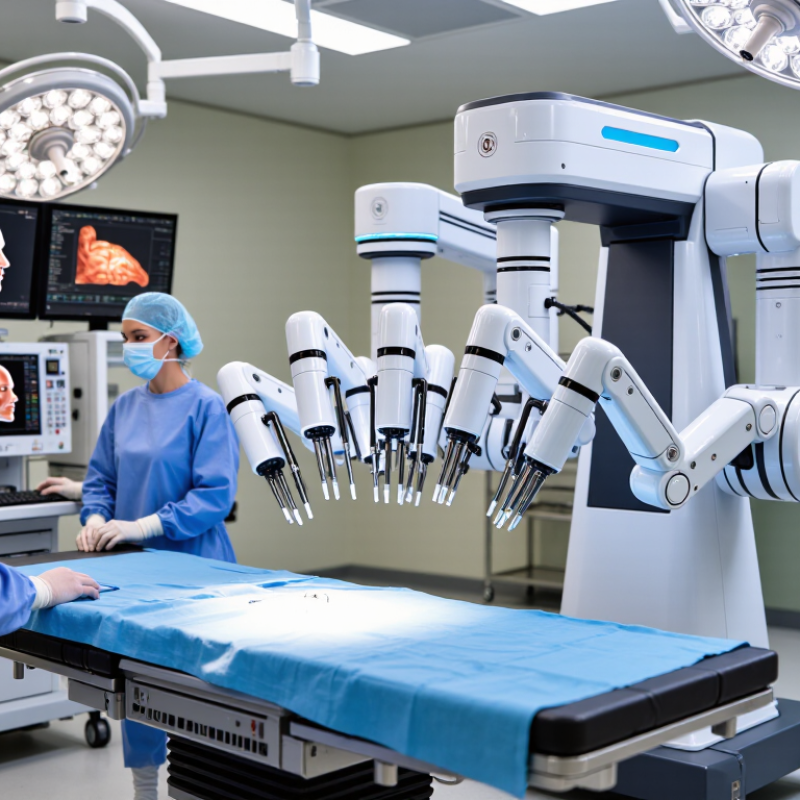
Surgical robots are computer-assisted systems that help surgeons perform precise movements through small incisions. They do not replace the surgeon. The FDA explains that robotically assisted devices require direct human control during procedures. A surgeon guides the instruments from a console, while the system can provide magnified views, tremor filtering, and controlled motion.
Their value becomes clearer in modern operating rooms. Fine instruments may rotate inside narrow spaces, like a wrist moving through a keyhole. This can support minimally invasive surgery, although results depend on training, patient selection, and hospital protocols. The Lancet Commission on Global Surgery reported that about 5 billion people lack access to safe, affordable surgical care. Robots cannot solve that gap alone. They may improve capability in well-equipped hospitals, but maintenance, disposable instruments, and specialist training remain serious barriers.
Market data shows strong interest. MarketsandMarkets estimated the surgical robotics market at approximately USD 7.4 billion in 2024, with projected growth to about USD 14.3 billion by 2029. These figures describe investment momentum, not guaranteed patient benefit. Evidence is still uneven across procedures, and some systems may increase operating costs or prolong setup time. Buyers should examine clinical outcomes, service support, cybersecurity controls, staff learning curves, and total ownership costs. The technology is impressive. The purchasing decision still needs restraint.
| Surgical Robot Category | Common Clinical Applications | How the System Is Controlled | Typical Visualization | Main Surgical Advantages | Important Limitations | Buyer Evaluation Priorities |
|---|---|---|---|---|---|---|
| Robotic Laparoscopic Systems | Prostate, gynecologic, colorectal, thoracic, general, and selected head-and-neck procedures. | A trained surgeon controls instrument arms from a console or remote control interface. The system does not independently decide or perform the operation. | High-definition or three-dimensional endoscopic imaging, depending on system configuration and procedure. | Stable camera control, articulated instruments, motion scaling, tremor reduction, and improved access to confined anatomical spaces. | High capital and maintenance costs, lengthy training requirements, additional setup time, and limited or absent tactile feedback in many systems. | Procedure volume, instrument availability, service support, operating-room space, training pathway, interoperability, and total cost of ownership. |
| Orthopedic Robotic-Arm and Navigation Systems | Total and partial knee replacement, selected hip procedures, and other bone-preparation or implant-positioning tasks. | The surgeon plans the procedure using imaging and navigation data; the robotic arm may guide or constrain the instrument within a defined plan. | Preoperative CT, intraoperative imaging, optical tracking, electromagnetic tracking, or bone-mounted reference systems. | Supports accurate bone preparation, implant alignment, reproducible planning, and real-time tracking of instruments and anatomy. | Accuracy depends on registration, tracking, imaging quality, fixation, surgical technique, and correct execution of the plan. | Compatibility with implant systems, imaging workflow, disposable costs, registration time, staff training, and evidence for target procedures. |
| Stereotactic Neurosurgical Robots | Biopsy guidance, electrode placement, deep-brain stimulation procedures, stereotactic lesion treatment, and selected navigation tasks. | The surgeon defines a trajectory using imaging and planning software; the robot assists with positioning or guidance under direct clinical supervision. | MRI, CT, stereotactic imaging, optical tracking, and image-fusion software may be used according to the procedure. | Helps support precise trajectory planning, repeatable positioning, and access to small or deep anatomical targets. | Accuracy can be affected by brain shift, registration error, patient movement, imaging quality, and fixation stability. | Imaging compatibility, trajectory-planning functions, emergency manual workflow, radiation-management procedures, and neurosurgical training. |
| Endovascular Robotic Platforms | Catheter and guidewire navigation in selected vascular, coronary, and electrophysiology procedures. | The physician controls catheter or guidewire movement from a workstation rather than manually manipulating devices at the patient table. | Fluoroscopy and angiographic imaging, with image overlays or navigation support on some platforms. | May reduce physician exposure to scattered radiation, provide remote instrument control, and support controlled device movement. | Availability may be limited by procedure type, compatible devices, regulatory authorization, imaging infrastructure, and workflow complexity. | Authorized indications, catheter compatibility, imaging integration, radiation-safety benefits, latency, backup manual operation, and local reimbursement. |
| Flexible Endoscopic Robotic Systems | Selected gastrointestinal, bronchoscopic, transoral, and other procedures requiring navigation through natural or surgically created passages. | The clinician controls the flexible endoscope and compatible instruments through a console or ergonomic control interface. | Flexible endoscopic video, commonly with high-definition imaging; three-dimensional visualization is not universal. | Improved scope stability, potentially easier navigation, controlled instrument positioning, and access to difficult angles. | Working-channel size, tissue access, device compatibility, image quality, cleaning requirements, and procedure-specific evidence may limit use. | Reprocessing standards, endoscope turnaround time, compatible accessories, infection-control requirements, and clinical validation. |
| Microsurgical and Supermicrosurgical Robots | Selected reconstructive, ophthalmic, nerve, lymphatic, and other procedures involving very small structures. | The surgeon operates through a motion-control interface that can scale hand movements and improve instrument stability. | Operating microscope or high-magnification video imaging, depending on the system and procedure. | Fine motion scaling, tremor reduction, stable instrument handling, and support for work on delicate vessels or nerves. | Narrow procedure indications, specialized training, long learning curves, high dependence on surgeon expertise, and limited clinical availability. | Microscope integration, instrument range, motion scaling, sterilization workflow, training resources, and evidence for intended indications. |
| Image-Guided Robotic Positioning Systems | Positioning of surgical instruments, cameras, probes, or access tools during image-guided procedures. | The clinical team plans the target and the robot holds or moves the tool to a planned position; the surgeon remains responsible for final placement and use. | CT, MRI, ultrasound, fluoroscopy, optical tracking, or hybrid image-guidance workflows. | Repeatable positioning, reduced manual holding, improved access to planned trajectories, and integration with navigation software. | Registration errors, imaging limitations, line-of-sight issues, patient movement, and dependence on correct preoperative or intraoperative data. | Imaging compatibility, cybersecurity, data-transfer standards, emergency release functions, operating-room integration, and service availability. |
It is a computer-assisted system that helps surgeons control instruments through small incisions. The surgeon remains in direct control. The robot does not operate independently.
They may provide magnified views, tremor filtering, and controlled instrument movement. Some instruments rotate inside narrow spaces, like a wrist through a keyhole. Benefits depend on training and patient selection.
No. A trained surgeon guides every instrument from a control console. The system supports movement and visualization. Human judgment still directs the procedure.
Hospitals should review procedure volume, patient needs, surgeon skills, and clinical evidence. They should test the robot beside anesthesia equipment. A glossy specification sheet is not enough.
Teams should measure docking time, instrument exchanges, turnover, and available floor space. They should observe patient positioning and device removal. Small delays can affect the entire schedule.
Training should include simulation, supervised cases, emergency undocking, and recurring competency checks. Nurses and technicians need practice with cleaning and instrument exchange. One afternoon is not enough.
Buyers should count instruments, service contracts, software updates, training, infrastructure, and repairs. They should also estimate operating-room delays. A low purchase price can hide major expenses.
Ask about alarms, manual overrides, maintenance intervals, failure reporting, and patient-data protection. Confirm local registration, labeling, clinical documents, and reporting duties. Approval in one market may not transfer elsewhere.
No. About five billion people lack safe, affordable surgical care. Robots may improve capability in well-equipped hospitals. They cannot replace basic infrastructure, staff, or reliable maintenance.
Surgical Robots are transforming modern healthcare by supporting surgeons with enhanced precision, visualization, stability, and control during minimally invasive and complex procedures. In 2026, these systems may combine advanced imaging, flexible instruments, artificial intelligence-assisted guidance, haptic feedback, data integration, and improved ergonomic design. Different categories serve different clinical needs, including systems for soft-tissue surgery, orthopedic procedures, microsurgery, endoluminal interventions, and image-guided treatment.
For global healthcare buyers, selecting the right Surgical Robots requires more than comparing technical specifications. Hospitals should assess clinical applications, procedure volume, operating-room compatibility, workflow efficiency, maintenance requirements, total cost of ownership, staff training, cybersecurity, patient safety, and evidence of performance. Procurement teams should also review regulatory approvals in their target markets, installation support, service availability, upgrade pathways, and the manufacturer’s training resources. A careful evaluation can help healthcare organizations choose a safe, practical, and scalable robotic solution that supports better surgical consistency and long-term operational value.

 Fule